Coeur d'Alene Airport · KCOE · Hayden, Idaho
Engine Bays · Undercarriages · Aircraft · Industrial Equipment
Request a QuoteThe Process
Dry ice cleaning — also called dry ice blasting — serving Spokane, North Idaho, and Eastern Washington from our hangar at Coeur d'Alene Airport. Non-abrasive, non-toxic, and completely dry. We use the ICS 410S with 480 gallons of on-site air storage to clean engine bays, undercarriages, aircraft interiors, and industrial equipment — without disassembly or water damage risk. Aerodrome is a member of DRYCE® Nation, the automotive dry ice cleaning community whose members are fully trained in proper dry ice cleaning techniques, with shared access to the field's leading methods and equipment.
What We Clean
Grease, road film, salt residue, and flaking undercoat come off in place — no water near your wiring, no teardown, no drying time. The usual first step before undercoating or ceramic coating, so the new coating bonds to clean metal.
On-site at KCOE with direct ramp access, so you can taxi to the facility rather than trailering. Dry ice cleaning is dry and non-conductive, which is what makes it workable around aircraft systems. Call ahead so we can coordinate.
Cleaning ahead of restoration work — getting a chassis or a component down to sound material so you can see what you actually have before deciding how far to take the job.
Grease, oil, carbon buildup, and product residue removed from machinery, tanks, conveyors, and processing lines — without water, solvents, or teardown. Safe around electrical components and sensitive tooling. We travel to your facility for equipment too large to move, or you can bring smaller components to the hangar.
Featured Work
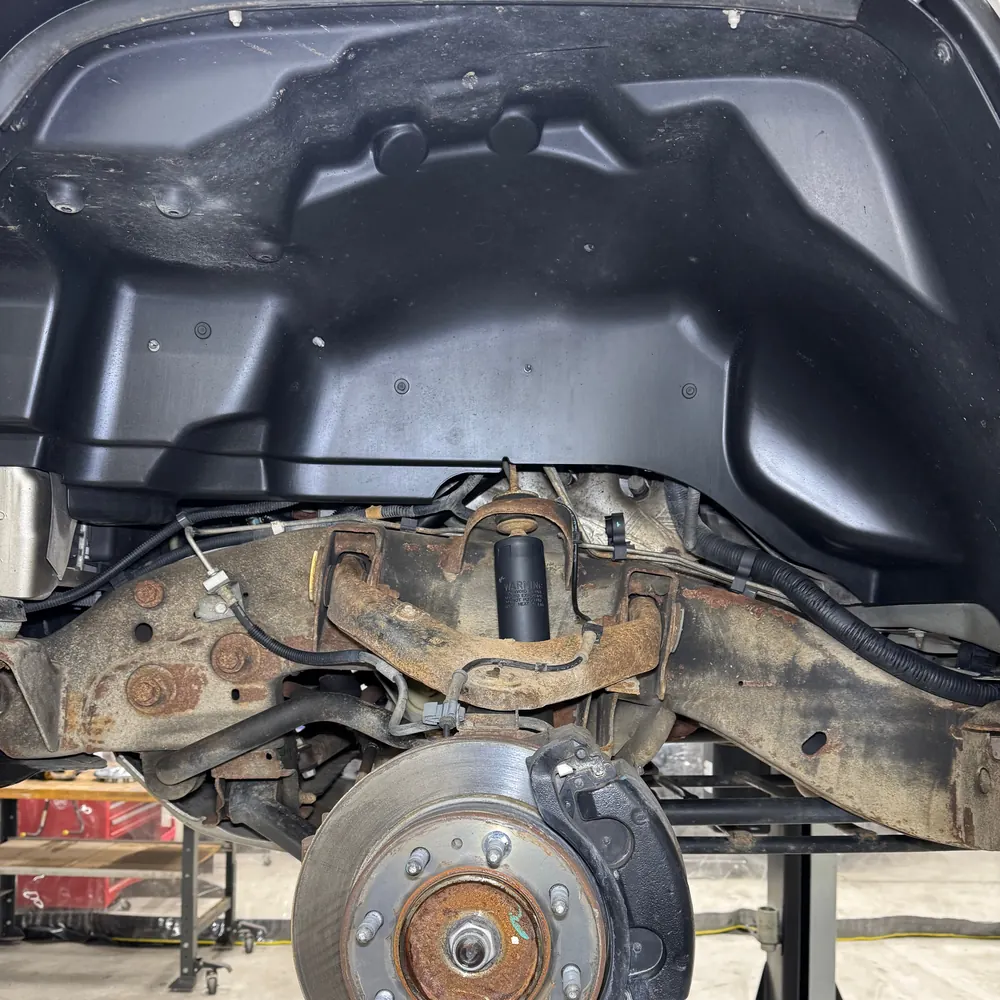
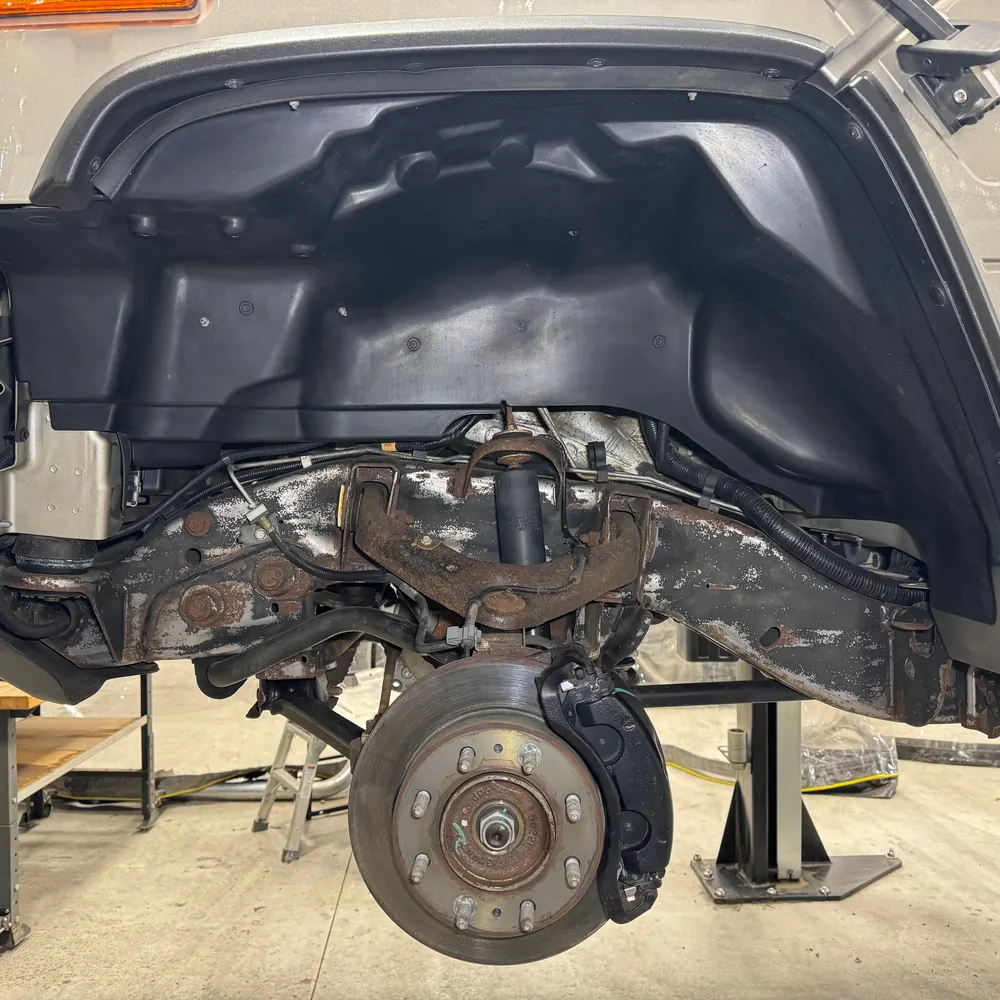
Dry ice cleaned and finished with KSL Ceramic Coating, front to back. This is the actual undercarriage after the work — not a stock photo.
Wheel Well · Liner Removed
Wheel Well · Detail
Rear Subframe · Fully Exposed
Common Questions
No. Dry ice is non-abrasive and non-conductive — the pellets sublimate on contact and lift contamination off the surface rather than cutting into it. Run properly, it is safe on paint, plating, castings, rubber, plastics, and wiring looms. Technique and air volume are what make the difference, which is why proper training matters.
It removes what sits on top of the metal — grease, road film, salt residue, flaking undercoat, and loose scale. It will not put back metal that corrosion has already eaten. On a chassis with surface rust you will get a clean, sound surface ready to coat. On genuine rot, you need metalwork first, and we will tell you that up front.
Usually not, and that is the main advantage of the process. We clean engine bays, undercarriages, and suspension in place — no water, no solvents, no teardown. Some jobs go faster and come out better with wheels or splash shields off, and we will let you know if yours is one of them.
Pressure washing means drying time and a real risk of forcing water into wiring, bearings, and electrical connectors. Soda blasting removes contamination too, but the media itself doesn't disappear — it has to be swept and vacuumed out of every seam and cavity afterward. Dry ice pellets sublimate on impact, turning straight to gas, so there's no water and no secondary media to clean up — just what came off the part.
Get In Touch
Phone
Location
Coeur d'Alene Airport (KCOE)
Hayden, Idaho
Service Area
North Idaho · Spokane
Eastern Washington · Western Montana